
Comment les aides deviennent des aides
From social workers to medical nurses, nobody dedicates their career to helping people without a reason. OK, there are some charlatans who exploit people, like everywhere; there are some people who just hope for a safe job or status, but maybe even then there are some hidden reasons why they were attracted to such a profession.
Still, let’s stay with those helping professionals who don’t focus on money, who might be aware that they’d never be rich or promoted, who don’t bait people with glamour and promises of magic, who care to make a positive change in the lives of others.
Ces personnes choisissent généralement leur profession en fonction de ce à quoi elles peuvent s'identifier plus facilement et qui plus est familier et important sur le plan personnelCertains d'entre eux sont naturellement plus empathiques que la moyenne, mais beaucoup trouvent l'aide importante parce qu'ils ont déjà ressenti le besoin d'aide, soit par leur propre expérience, soit par quelqu'un de leur entourage. Ces aides sont les plus susceptibles de souffrir d'épuisement professionnel.
Burnout is a syndrome characterized by a lack of energy, motivation, and a sense of meaning in one’s job, often resulting from long-term stress, lost ideals, and diminished hope. It frequently seeps into personal life, manifesting as anxiety and depression. On the surface, it may appear to be the result of external stress and disappointment, but deeper causes often lie beneath.
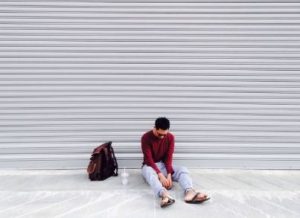
Un sens exagéré des responsabilités dès l'enfance
If children face illness, violence, addiction or some other type of chronic instability in their close environment, they will usually feel the need to help. They might even feel it’s their responsibility to help, even if nobody asks them to (and some parents do ask children for help, unhealthy as it is). A small child doesn’t have enough experience to be able to estimate how (un)realistic that is.
At the same time, children naturally perceive themselves as the center of everything that is going on around them. Thus even if they don’t see themselves as contributing or causing the problem (which small children often do), they might perceive themselves as responsible for providing solutions, or at least some relief.
Bien sûr, les enfants ne sont généralement pas la véritable cause des problèmes familiaux, et ils n'ont pas non plus les ressources et l'expérience nécessaires pour apporter une aide significative. Pourtant, même si cela est irréaliste, les enfants se considéreraient comme une partie du problème Certains enfants peuvent s'impliquer activement (par exemple, dans certains cas de violence familiale, les enfants essaient de protéger verbalement ou physiquement un parent maltraité), et d'autres enfants essaient simplement d'être aussi bons que possible, en espérant que cela se répercutera sur les personnes importantes.
Comme la cause du problème n'est généralement pas liée à l'enfant, la situation ne s'améliorera probablement pas et pourrait même s'aggraver avec le temps. Plus les enfants sont jeunes et sensibles, plus ils sont susceptibles’d se blâmer for their lack of success. This doesn’t happen on the level of rational thinking (which might not even be developed yet), but in much more instinctive, emotional parts of the brain.
Such children might spend a lot of time feeling stress, anxiety or emotional paralysis, on one hand believing they should be able to influence something, and on the other hand feeling that peu importe combien ils essaient, ce n'est’s pas assez.
Ce dernier est un problème commun dont beaucoup de gens souffrent, mais ils ne’choisissent pas tous des professions d'aide. Certains pourraient essayer de résoudre ces sentiments non résolus en tombant amoureux de personnes à problèmes, qu'ils pourraient essayer de sauver et d'aider, dans l'espoir inconscient que cette fois-ci, ils’seraient capables de satisfaire les autres ; besoins et leurs propres attentes envers eux-mêmes. Cela finit souvent par l'aidant qui devient la victime et recommence tout le cycle. Mais cela’est une autre histoire.
Se sentir responsable pour le monde entier
Si ces personnes décident de devenir des professionnels de l'aide, elles projetteront facilement leur besoin d'aide de l'enfance et leur attachement à l'obtention des résultats souhaités sur de nombreux cas auxquels elles sont confrontées dans leur travail. Alors, un manque de succès ou un succès moindre que prévu peut déclencher problèmes d'enfance non résolus of feeling inadequate, unrealistic responsibility, and guilt.
Such people might spend their free time pondering the mistakes they might have made, all the things they could have done differently, the moments in which they could have used a better word or invested a bit more effort… forgetting all the mitigating circumstances, as well as the responsibility of other people.
A client I will call Adriana is a helping professional. Her parents used to fight a lot when she was a child, and sometimes fights would escalate into physical violence. Adriana felt stress and guilt, she tried to be good and cooperative, but would achieve nothing.
Besides, her mother also carried guilt and sense of inadequacy from her own childhood, which Adriana modeled through the normal process of learning through identifying with the parent of the same gender. Both parents were also very critical to Adriana, while, as is often the case, taking her qualities and good results for granted.
Lorsqu'Adriana se sent critiquée dans son travail, ou fait face à un manque de succès, les vieux sentiments d'inadéquation et de culpabilité ressortent. Elle remet en question son comportement en détail, se demandant ce qu'elle aurait pu faire différemment, même si rationnellement, elle en serait consciente’t ont beaucoup changé. Le stress et le conflit intérieur que cela crée la privent souvent de son énergie, de sorte que, surtout lorsqu'elle rentre à la maison, elle se sent fatiguée et démotivée. Bien sûr, cela influence sa relation avec sa famille et sa capacité à faire les tâches ménagères (qu'elle estime encore une fois qu'elle devrait être capable de bien faire). Elle se sent alors encore plus coupable et inadéquate.
Not only that, but Adriana feels she should help others even more. She already donates to charities, but perhaps she should donate even more. Whenever a catastrophe happens somewhere in the world, she feels she should help at least a little. Sometimes she feels guilty when she allows herself to enjoy leisure time, because there are so many people suffering in the world, and maybe she could give a bit more of her time to them.
She’s aware that such extra efforts would be like a drop in the ocean, but each drop still means something. Maybe dismissing the influence of her efforts is just a way to avoid responsibility? There were people in history who achieved incredible results through their courage and hard work, in spite of seemingly insurmountable obstacles. There are people who risked their safety, or even their lives, for the change they wanted, and they are to thank for what we have today.
When enough people come together, they can bring change – maybe Adriana should be braver, louder, gather other people around her? But she lacks energy and enthusiasm, and then she wonders if it’s just selfishness.
Pour un petit enfant, la famille est le monde entier. Il est difficile d'être conscient de ce qui se passe à l'extérieur. Ainsi, tout comme les adultes peuvent s'attendre à ce que le reste du monde les traite comme leur famille les a traités, ils peuvent aussi projeter leur sentiment de responsabilité envers leurs familles sur le monde entier.
Comment trouver l'équilibre ?
Adriana is, of course, correct when she says social responsibility is important and that even a drop in the ocean means something. If most people thought their contribution wouldn’t matter, or that somebody else should take responsibility, nothing would ever change – and that’s exactly how things often go.
Yet, Adriana takes a disproportionate, exaggerated part of that responsibility upon herself; not enough to endanger her safety and life, but enough to damage the quality of her life, and perhaps health, too. It can be more difficult to recognize a feeling as childish when there are rational arguments supporting it. And then we can go over the top.
Adriana felt great relief as soon as we managed to find and reach the lost, frightened little girl inside her, which on some level was still listening to her parents fighting. Understanding where her burden comes from and why she couldn’t resolve it as a child already gave her a much better perspective. Additional work on healing her relationship with parents helped her feel good in her own skin and appreciate the value of her efforts.
She’ll probably always desire to help people – there’s nothing wrong with it – but if she can support the little girl within, she can find balance – recognize when she had enough and value the quality of her own life without feeling guilty.
Beaucoup de gens sont surpris de découvrir combien d'émotions peuvent refléter l'expérience et le conditionnement de l'enfance, même lorsque ces émotions semblent être causées par des circonstances externes. En particulier, les sentiments de culpabilité, d'impuissance ou d'insuffisance prennent souvent naissance dans l'enfance et sont souvent à l'origine de la dépression à l'âge adulte. Il’vaut la peine de découvrir d'où ils viennent.
Articles connexes :
 Français
  English
  Deutsch (Sie)
  العربية
  Español
  हिन्दी
  Italiano
  日本語
日本語  简体中文
简体中文  Українська
  Русский
  Polski